
The Role of Permit to Work (PTW) Systems in Offshore Wind Operations
The Role of Permit to Work (PTW) Systems in Offshore Wind Operations
In the high-risk, multi-contractor environment of offshore wind, controlling work activities is just as critical as managing vessel movements. With simultaneous operations (SIMOPS), confined workspaces, and hazardous energy systems, ensuring that every task is properly authorised, risk-assessed, and coordinated is fundamental to safe and efficient project delivery.
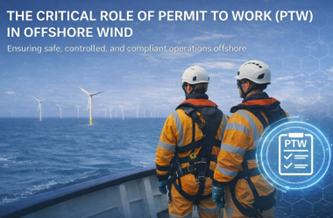
This is where Permit to Work (PTW) systems play a vital role. Acting as the backbone of operational control, PTW systems ensure that all activities are planned, reviewed, and executed under strict safety governance — reducing the risk of incidents while maintaining operational efficiency.
How PTW Enhances Offshore Wind Site Management
At Nautic Energy, we deploy advanced digital PTW solutions through NOMAS (Nautic Offshore Management Access System), providing a structured and fully auditable approach to managing offshore activities.
The system enables full visibility of ongoing work scopes, ensuring that all tasks are authorised, coordinated, and aligned with site conditions in real time.
🔹 Centralised Work Authorisation
All work activities are managed through a single digital platform, ensuring:
Standardised permit creation and approval workflows
Clear definition of task scope, location, and responsible parties
Controlled issuance of permits by authorised personnel only
Elimination of paper-based inconsistencies and delays
🔹 SIMOPS & Task Coordination
With multiple contractors working across turbines, substations, and vessels, PTW systems enable:
Visibility of all active permits across the site
Identification of conflicting activities (e.g. hot works vs fuel transfers)
Coordination between teams to safely sequence operations
Integration with marine coordination to align vessel and work activities
🔹 Risk Assessment & Control Measures
Each permit is supported by structured risk controls, including:
Task-specific hazard identification and mitigation measures
Linkage to Method Statements (RAMS)
Isolation requirements (LOTO) where applicable
Toolbox talk confirmations prior to work commencement
🔹 Real-Time Status & Accountability
Digital PTW systems provide live updates on:
Active, suspended, and completed permits
Responsible persons and work parties
Location-based activity tracking across the wind farm
This ensures full accountability and allows Marine Coordinators and O&M teams to maintain control at all times.
🔹 Audit Trail & Compliance
A fully digital PTW system creates a complete record of:
Permit approvals and sign-offs
Time-stamped activity logs
Changes, suspensions, and close-outs
This is essential for:
Regulatory compliance
Incident investigations
Client reporting and assurance
Benefits to Developers and Operators
By integrating PTW into daily operations, Nautic Energy supports:
Improved safety performance through controlled work execution
Reduced operational risk during SIMOPS
Enhanced coordination between offshore teams and vessels
Greater efficiency through streamlined approval processes
Full transparency and traceability of all work activities
Why Choose Nautic Energy?
With extensive offshore wind experience across construction and operations phases, Nautic Energy understands the practical challenges of managing complex offshore activities.
Through NOMAS, we combine PTW, marine coordination, and vessel tracking into a single integrated platform — delivering a smarter, safer, and more efficient approach to offshore wind site management.
We don’t just provide systems — we provide experienced personnel and proven processes that ensure your project operates with full control and confidence.
Looking to enhance your Permit to Work system and offshore coordination?
Contact Nautic Energy to discuss how NOMAS can support your project
What is VTMS and Why It Matters for Offshore Wind Projects
In the complex world of offshore wind energy, real-time situational awareness is critical to safety and efficiency. That’s where VTMS — Vessel Traffic Management System — plays a vital role.
At Nautic Energy, we utilize advanced VTMS platforms such as SeaPlanner to provide a live overview of vessel movements, personnel transfers, and operations across wind farm zones. These systems allow us to proactively manage risks and coordinate all offshore activity with precision.

The Role of VTMS in Offshore Wind Farm Operations
In the increasingly complex and high-traffic environment of offshore wind energy, real-time situational awareness isn’t just beneficial — it’s essential. From overlapping construction schedules to simultaneous operations (SIMOPS) involving multiple vessels and contractors, maintaining order, safety, and efficiency requires a system that can monitor, track, and manage dynamic marine activity.
That’s where VTMS — Vessel Traffic Management Systems — come in. Much like air traffic control for offshore environments, VTMS provides a central platform through which marine coordination teams can maintain complete visibility and control over site activity.
How VTMS Enhances Offshore Wind Site Management
At Nautic Energy, we deploy advanced VTMS platforms such as SeaPlanner to deliver a live, data-rich overview of all vessel activity, personnel transfers, and safety protocols across the wind farm footprint. The system enables us to not only track vessels and personnel, but also to anticipate and deconflict operations, reducing downtime and preventing incidents before they occur.
Key functional areas include:
🔹 Live Vessel Tracking & Geofencing
All vessels working on the project are registered by MMSI and tracked in real time. This includes:
Monitoring speed, heading, and position
Assigning permissions or alerts based on proximity to critical infrastructure
Automatic geofence alarms if a vessel breaches a designated safety zone (e.g., around jack-up barges or cable lay areas)
🔹 Safety Zone Enforcement
VTMS platforms automatically enforce exclusion and buffer zones:
Alarms are triggered if unauthorized vessels enter active construction zones (typically 500m safety radius)
Marine Coordinators are instantly alerted to intervene, contact masters, or escalate to client representatives
🔹 SIMOPS Management
With multiple operations happening concurrently — such as turbine installation, cable laying, and crew transfers — the VTMS allows us to:
Visualize all activity layers and vessel types in a unified interface
Schedule and pre-approve activities to avoid overlap
Coordinate with contractors to mitigate operational conflict and risk
🔹 Personnel Tracking & Movement Control
All offshore workers are registered within the VTMS, including:
Certification verification (e.g., GWO compliance)
Site induction tracking
Live visibility of who is on what vessel, en-route, or on a turbine
Enables controlled transfers and automated headcounts in case of emergency
Benefits to Developers and Contractors
By integrating VTMS as a core part of project delivery, Nautic Energy ensures:
Reduced downtime due to better vessel utilization and scheduling
Improved safety compliance across all marine operations
Streamlined communication between marine coordination, vessels, and site teams
Full audit trails for vessel activity and personnel movements — critical for client reporting and regulatory inspections
Why Choose Nautic Energy?
With over 20 years of offshore wind experience and a growing presence in Taiwan and the wider APAC region, Nautic Energy brings hands-on expertise with major VTMS platforms and international marine standards. We don’t just operate the system — we strategically integrate it into your site management plan, delivering smarter coordination, safer projects, and more confident offshore execution.
Looking for a partner with proven VTMS capability and regional experience?
Contact Nautic Energy to discuss your offshore coordination needs.