
The Importance of PPE in Offshore Wind: Protecting People in High-Risk Environments
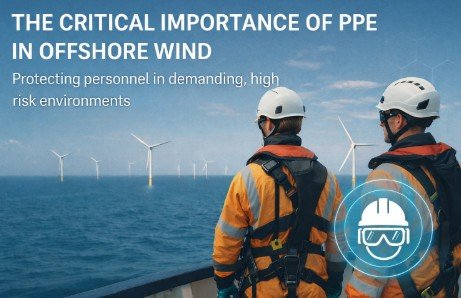
The Importance of PPE in Offshore Wind: Protecting People in High-Risk Environments
Offshore wind is one of the most demanding industrial environments in the world. From vessel transfers and turbine access to lifting operations and live electrical systems, personnel are routinely exposed to hazards that leave no margin for error.
In this context, Personal Protective Equipment (PPE) is not a box-ticking exercise — it is a critical last line of defence that protects lives, prevents injuries, and ensures offshore operations continue safely and efficiently.
At Nautic Energy, PPE is viewed as a core component of operational safety, embedded into every task, every transfer, and every offshore activity.
⚠️ Why PPE Is So Critical Offshore
Offshore wind operations expose personnel to a unique combination of risks, including:
Working at height on turbines and substations
Vessel transfers in moving seas
Heavy lifting and suspended loads
Rotating machinery and pinch points
Electrical hazards during commissioning and O&M
Harsh weather, cold water immersion, and low visibility
While engineering controls, procedures, and training reduce risk, PPE provides essential protection when hazards cannot be fully eliminated.
🧰 What Is PPE in Offshore Wind?
PPE refers to specialist equipment worn by personnel to minimise exposure to specific risks. In offshore wind, this typically includes:
Safety helmets with chin straps
Cut-resistant gloves
Eye and face protection
Flame-resistant or arc-rated clothing
Safety footwear
Immersion suits and lifejackets
Fall arrest and rescue equipment
Each item is selected based on task-specific risk assessments and offshore safety standards.
🛡️ Key Functions of PPE in Offshore Operations
1. Injury Prevention
PPE protects against common offshore injuries such as:
Head impacts during transfers
Hand injuries from sharp edges or tools
Eye injuries from debris or spray
Slips, trips, and falls
2. Life-Saving Protection
In a marine environment, PPE such as immersion suits and approved lifejackets can mean the difference between survival and fatality following a man-overboard or vessel incident.
3. Compliance and Assurance
Correct PPE use ensures compliance with:
Project HSE requirements
Client standards
Flag state and coastal authority regulations
It also demonstrates a strong safety culture to auditors, regulators, and insurers.
👷 PPE and Human Factors
Even the best PPE is ineffective if it is:
Incorrectly selected
Poorly fitted
Uncomfortable or impractical
At Nautic Energy, we emphasise PPE that:
Fits correctly
Is task-appropriate
Encourages consistent use rather than avoidance
This human-centred approach significantly improves compliance and real-world safety outcomes.
🔍 PPE Management in Offshore Wind Projects
Effective PPE management goes beyond issuing equipment. It includes:
Task-based PPE risk assessments
Verification of PPE certification and standards
Training in correct use and limitations
Inspection, maintenance, and replacement regimes
Integration with Permit-to-Work (PTW) systems
Digital HSE and marine coordination platforms such as SeaPlanner support PPE compliance by linking PPE requirements directly to offshore activities and permits.
🚨 PPE in Emergency Scenarios
During emergencies — such as man overboard, fire, or evacuation — PPE plays a critical role in:
Maintaining buoyancy and thermal protection
Protecting against secondary injuries
Supporting rescue and recovery operations
Marine Coordinators and offshore supervisors rely on confidence that the right PPE is being worn before work begins.
💬 Final Thoughts
PPE is not a substitute for good planning, training, or engineering controls — but offshore, it is often the last and most critical barrier between personnel and serious harm.
When PPE is properly selected, worn correctly, and actively managed, it:
Reduces injury rates
Enhances workforce confidence
Strengthens safety culture
Protects project continuity
At Nautic Energy, PPE forms an integral part of our offshore safety philosophy, supporting safe operations across construction, commissioning, and O&M campaigns worldwide.
Want to strengthen PPE compliance on your offshore project?
Contact Nautic Energy today to learn how our marine coordination and HSE expertise can support safer offshore operations.