
Explore Offshore Wind Topics & Insights
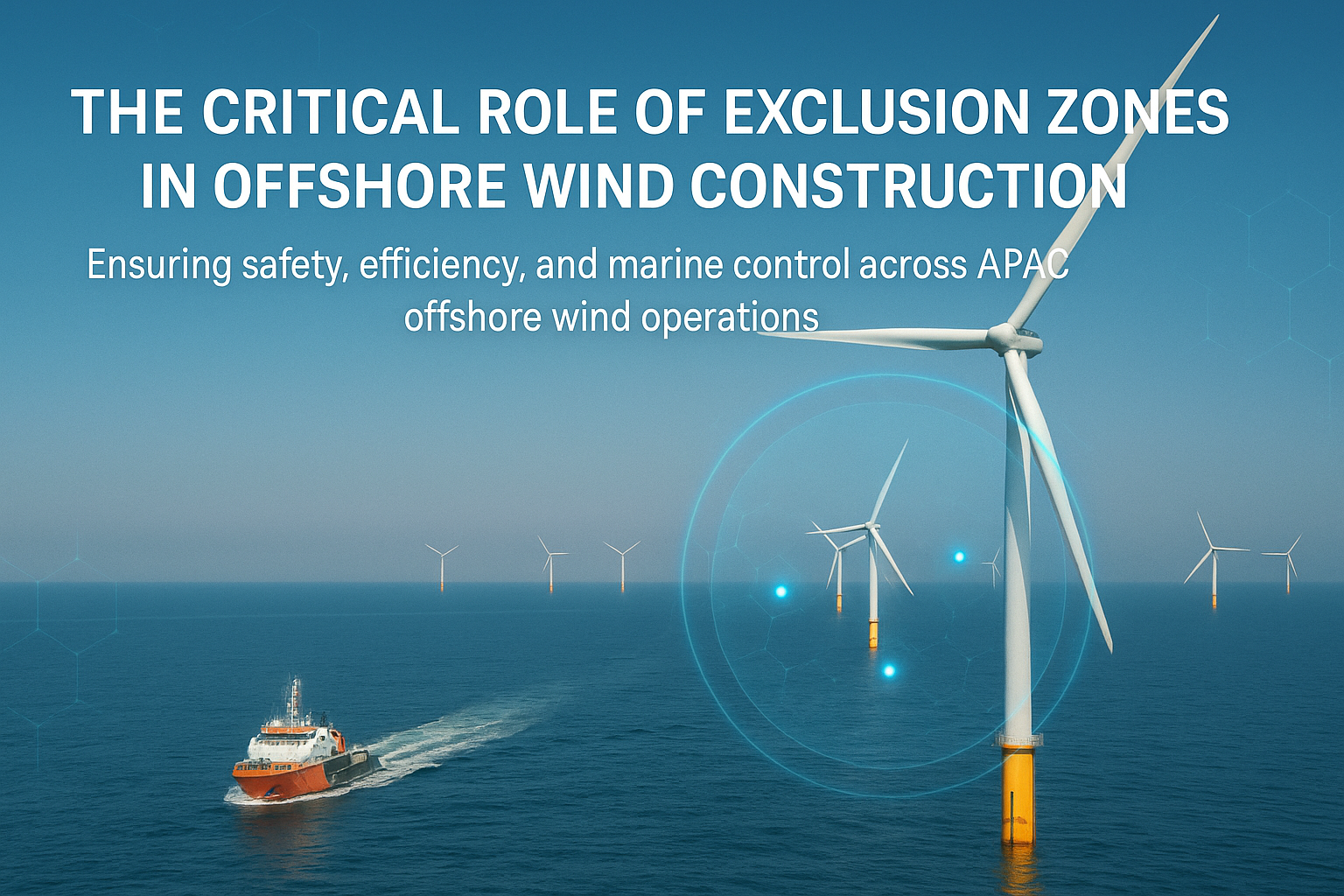
Exclusion Zones in Offshore Wind: Vessel Safety, SIMOPS & Risk Control
Exclusion Zones in Offshore Wind: Vessel Safety, SIMOPS & Risk Control
By Nautic Energy – Marine Services & Offshore Support
Smooth Seas, Safe Sites: Why Exclusion Zones Matter in Offshore Wind Construction
As offshore wind development continues to expand across the APAC region, the importance of well-managed marine operations has never been higher. The waters surrounding Taiwan, Japan, Korea, and Southeast Asia are some of the busiest and most dynamic maritime environments in the world. Installation vessels, fishing fleets, survey teams, CTVs, and commercial shipping all operate in close proximity — often simultaneously.
To maintain safety and efficiency during construction, offshore wind developers rely on one essential tool:
Exclusion Zones.
These controlled maritime areas protect construction teams, installation vessels, survey spreads, and the wider maritime community. Managed correctly, exclusion zones significantly reduce risk, prevent operational delays, and support safe offshore wind construction.
What Is an Exclusion Zone in Offshore Wind?
An exclusion zone is a clearly defined area around offshore wind activities where access is restricted or controlled.
They may surround:
Turbine installation areas
Jack-up vessels and heavy lifting operations
Cable-laying and burial spreads
Survey vessels and ROV/diving operations
Geophysical and geotechnical campaigns
UXO investigation areas
Temporary construction spreads
The purpose is simple:
to maintain a safe, predictable working environment and prevent interference with offshore operations.
Why Exclusion Zones Are Essential for Offshore Wind Operations
1. Protecting Personnel and Offshore Assets
Offshore wind construction involves high-risk activities such as lifting, piling, diving, trenching, and cable installation. Exclusion zones minimise the chance of:
Vessel collisions
Interruption to lifting operations
Damage to subsea equipment
Interaction with divers or ROVs
Accidental contact with exposed cables
Maintaining a clear perimeter is a fundamental part of offshore construction safety.
2. Preventing Delays and Operational Downtime
Unplanned vessel intrusions can force immediate work stoppages under offshore HSE protocols. This can disrupt:
Turbine installation schedules
Jack-up moves
Cable-laying sequences
Survey operations
Maintenance campaigns
Well-planned and well-managed exclusion zones dramatically reduce these disruptions.
3. Protecting Local Maritime Users
The APAC region — especially Taiwan — has high levels of coastal and offshore fishing activity. Exclusion zones protect local marine traffic by:
Clearly marking restricted areas
Broadcasting zone boundaries via AIS
Issuing Notices to Mariners (NTMs)
Helping vessels avoid subsea hazards and construction assets
This ensures the safety of the wider maritime community.
Types of Exclusion Zones in Offshore Wind
Construction Exclusion Zones
Active around installation vessels, jack-ups, barges, or crane operations — typically 24/7.
Survey & Temporary Work Zones
Used during UXO campaigns, geophysical surveys, ROV inspections, and sampling.
Cable-Lay & Burial Zones
Protect exposed cables, trenching equipment, and subsea tools.
Environmental Protection Zones
Established near sensitive habitats or during seasonal restrictions.
How Exclusion Zones Are Managed Offshore
Maintaining effective exclusion zones requires coordinated planning, reliable communication tools, and experienced offshore management.
1. Marine Coordination (MC)
Marine Coordinators — such as those deployed by Nautic Energy — manage:
Vessel access approvals
SIMOPS planning
Daily briefings
Permit-to-work integration
Radio communications
Personnel tracking
Scheduling for CTVs and construction craft
This “control tower” function ensures safe and organised operations.
2. Guard Vessels & Patrol Craft
Guard vessels support zone integrity by:
Monitoring the boundary
Communicating with approaching craft
Providing early intervention
Supporting emergency response
They play a vital role in the high-traffic waters of Taiwan and the broader APAC region.
3. AIS Marking & Virtual Buoy Systems
Digital Aids to Navigation (AtoNs) allow exclusion zones to be marked electronically and displayed on AIS-equipped vessels.
Nautic Energy’s Virtual Buoy & Communications System offers:
High-visibility digital markers
Real-time updates
Reduced reliance on physical buoys
Better monitoring for evolving work areas
This is especially effective for dynamic construction environments.
4. Notices to Mariners & Stakeholder Communication
Communication with:
Fishing associations
Local ports
Coast Guard
Commercial shipping
Marine agencies
helps ensure that all maritime users understand the construction footprint and avoid restricted zones.
APAC-Specific Offshore Challenges
Offshore wind operations in Asia-Pacific face unique regional conditions that make exclusion zones especially important:
Dense fishing vessel presence
Strong currents and seasonal swell
Typhoon-prone weather windows
Congested ports and approaches
Multinational, multilingual offshore crews
Rapidly changing marine conditions
These factors require well-planned operational controls and experienced local marine management.
How Nautic Energy Supports Exclusion Zone Management
Nautic Energy provides comprehensive offshore marine services supporting safe and efficient exclusion zone management:
✔ Marine Coordination & 24/7 Vessel Traffic Control
Coordinating CTVs, supply vessels, contractors, and survey craft.
✔ Offshore Site Management
Ensuring zone integrity during daily operations.
✔ Virtual Buoy & Offshore Communications Systems
Digital AtoNs and remote marking for construction areas and cable routes.
✔ Surveying & Seabed Operations Support
Supporting geophysical, geotechnical, and UXO survey operations.
✔ HSE Integration
Ensuring exclusion zones align with project safety cases and emergency plans.
✔ Global Weather Forecasting
Supporting safe access, planning, and work execution.
With extensive experience across Taiwan and APAC offshore wind projects, Nautic Energy understands the unique operational conditions of this region.
Conclusion
Exclusion zones are a critical component of offshore wind construction, protecting crews, vessels, subsea assets, and the wider maritime community. In the fast-growing offshore wind markets of APAC, well-designed and professionally managed exclusion zones are essential to safe and efficient operations.
To learn how Nautic Energy can support your offshore operations, marine coordination, and site-management needs, contact Nautic Energy today.
Offshore Wind Site Management: Coordination, Safety & Operational Control
Offshore Wind Site Management: Coordination, Safety & Operational Control
Offshore wind farms are among the most complex infrastructure projects in the world — vast marine construction zones with hundreds of people, dozens of contractors, and constantly shifting logistics. In this high-risk, high-value environment, effective Site Management is not optional — it’s mandaotry.
At Nautic Energy, we provide comprehensive Site Management services that keep offshore wind projects under control, compliant, and on course — from mobilisation ports. Marine coordination centre to offshore installation sites. Our team ensures every phase is delivered safely, efficiently, and to the highest industry standards.
What Is Site Management?
Site Management is the real-time coordination of all activities at an offshore wind project site — both onshore and offshore. It connects the moving parts: vessels, teams, tools, vessels, schedules, and safety systems, ensuring work proceeds smoothly and safely.
Whether at a fabrication / pre-assembly yard or offshore installation site, our Site Management ensures the project remains audit-ready, stakeholder-aligned, and performance-driven at every step.
Why It Matters
Offshore wind construction and commissioning involve:
Multiple subcontractors operating simultaneously (SIMOPS)
Harsh marine conditions that affect access and productivity
Cross-disciplinary interfaces (civil, electrical, marine, logistics)
Stringent HSE, environmental, and quality standards
Without structured Site Management, projects face:
Delays and cost overruns
Safety breaches or non-conformances
Poor communication and reporting inefficiencies
Coordination breakdowns between port and offshore operations
In short, Site Management is what keeps complexity under control — and projects on track.
Our Site Management Capabilities
At Nautic Energy, our embedded Site team act as the operational hub for each campaign, ensuring seamless coordination between marine operations, construction teams, and project management offices.
✅ 1. Contractor Coordination
Oversee and align multiple contractors across scopes
Manage cross-discipline interfaces (marine, civil, electrical)
Lead daily coordination and progress meetings
✅ 2. HSE Oversight
Implement, enforce and monitor site-specific HSE plans
Conduct toolbox talks, safety briefings, and drills
Ensure compliance of all personnel and equipment
✅ 3. Logistics & Vessel Scheduling
Coordinate vessel movements and operations
Track personnel movement, training, and certification
✅ 4. Site Documentation & Reporting
Maintain site logs, reports, and permit-to-work systems
Deliver clear KPI-based reporting to clients and stakeholders
Prepare for audits, inspections, and compliance checks
✅ 5. Interface Management
Liaise with Marine Coordination and onshore project teams
Integrate weather forecasts and Vessle limitations into daily planning
Enable real-time decision-making through clear communication
Our Global Experience
Nautic Energy has delivered Site Management and operational support for major offshore wind projects across:
United Kingdom
Europe
Taiwan and the Asia-Pacific region
Our team combines hands-on operational expertise with a deep understanding of developer, EPC, and contractor perspectives, ensuring balanced and effective project delivery — no matter the environment or project stage.
💬 Final Thoughts
In the offshore wind industry, Site Management is the glue that holds together people, processes, and performance. Done right, it keeps your project safe, efficient, and fully aligned with stakeholder expectations.
At Nautic Energy, we don’t just manage sites — we enable execution, safeguard standards, and empower clients with clarity and control.
Looking for experienced Site Management support?
Contact Nautic Energy today or explore our full range of Site Management Services to learn how we can support your next offshore campaign.
Marine Coordination in Offshore Wind: Vessel Control, SIMOPS & Safety
🌊 Marine Coordination in Offshore Wind: Why It’s Critical to Safe & Efficient Operations
As the offshore wind industry expands globally, the complexity of managing large-scale marine operations has grown in tandem. One of the most vital roles in ensuring project success — yet often behind the scenes — is Marine Coordination.
At Nautic Energy, Marine Coordination is not just a logistical role. It's the command centre of safety, oversight, and operational fluidity during construction, commissioning, and maintenance of offshore wind farms.
⚓ What Is Marine Coordination?
Marine Coordination refers to the centralised management and control of all offshore vessel and personnel movements on a wind farm project. It ensures every operation at sea — from transferring technicians to moving heavy-lift vessels — is executed safely, efficiently, and in full compliance with regulatory and client standards.
Why Is It Important?
Marine Coordination is essential because offshore projects involve:
Multiple contractors operating simultaneously (SIMOPS)
Vessels ranging from Crew Transfer Vessels (CTVs) to cable-laying ships
Harsh, dynamic weather conditions
Dozens, sometimes hundreds, of offshore personnel each day
Without proper coordination, the risks of accidents, delays, or costly downtime increase significantly.
Key Functions of a Marine Coordinator
At Nautic Energy, our Marine Coordinators carry out a range of critical tasks, including:
1. Vessel Traffic Management
We monitor and manage all vessel movements using advanced systems like SeaPlanner VTMS, ensuring traffic separation, safety zone enforcement, and optimized access to assets like turbines and substations.
2. Live Personnel Tracking
Every person offshore is tracked in real-time. Coordinators know who is on which vessel, which turbine, and for how long — an essential part of emergency response planning.
3. Radio Communications
We maintain constant communication across marine VHF, TETRA, or digital radio networks — ensuring real-time coordination with marine crews, transfer vessels, and site teams.
4. Safety and Compliance Oversight
We enforce exclusion zones around construction areas, confirm certifications for vessels and personnel, and maintain audit-ready records.
5. Emergency Response
In the event of an incident, the Marine Coordinator is the first to respond — triggering protocols, notifying stakeholders, and supporting recovery operations.
Tools of the Trade
We rely on integrated digital systems like SeaPlanner to provide:
Real-time vessel tracking
Permit-to-work management
Certificate validation
Weather data integration
Reporting and audit logs
These systems enhance both the safety and efficiency of the wind farm lifecycle.
Final Thoughts 💬
Marine Coordination is the heartbeat of offshore operations. When done well, it reduces downtime, improves safety outcomes, and ensures your project stays on course — regardless of the challenges at sea.
At Nautic Energy, we bring two decades of hands-on experience in offshore wind operations across the UK, Europe, and Asia. Our coordinators are former mariners, construction managers, and marine control specialists — combining technical know-how with situational awareness to keep projects running safely and smoothly.
Want to learn how Nautic Energy can support your next offshore campaign?
Contact us today or explore our Marine Services to learn more.
Marine Coordination in Offshore Wind: Vessel Control, SIMOPS & Safety
As the offshore wind industry expands globally, the complexity of managing large-scale marine operations has grown in tandem. One of the most vital roles in ensuring project success — yet often behind the scenes — is Marine Coordination.
At Nautic Energy, Marine Coordination is not just a logistical role. It's the command centre of safety, oversight, and operational fluidity during construction, commissioning, and maintenance of offshore wind farms.
⚓ What Is Marine Coordination?
Marine Coordination refers to the centralised management and control of all offshore vessel and personnel movements on a wind farm project. It ensures every operation at sea — from transferring technicians to moving heavy-lift vessels — is executed safely, efficiently, and in full compliance with regulatory and client standards.
Why Is It Important?
Marine Coordination is essential because offshore projects involve:
Multiple contractors operating simultaneously (SIMOPS)
Vessels ranging from Crew Transfer Vessels (CTVs) to cable-laying ships
Harsh, dynamic weather conditions
Dozens, sometimes hundreds, of offshore personnel each day
Without proper coordination, the risks of accidents, delays, or costly downtime increase significantly.
Key Functions of a Marine Coordinator
At Nautic Energy, our Marine Coordinators carry out a range of critical tasks, including:
1. Vessel Traffic Management
We monitor and manage all vessel movements using advanced systems like SeaPlanner VTMS, ensuring traffic separation, safety zone enforcement, and optimized access to assets like turbines and substations.
2. Live Personnel Tracking
Every person offshore is tracked in real-time. Coordinators know who is on which vessel, which turbine, and for how long — an essential part of emergency response planning.
3. Radio Communications
We maintain constant communication across marine VHF, TETRA, or digital radio networks — ensuring real-time coordination with marine crews, transfer vessels, and site teams.
4. Safety and Compliance Oversight
We enforce exclusion zones around construction areas, confirm certifications for vessels and personnel, and maintain audit-ready records.
5. Emergency Response
In the event of an incident, the Marine Coordinator is the first to respond — triggering protocols, notifying stakeholders, and supporting recovery operations.
Tools of the Trade
We rely on integrated digital systems like SeaPlanner to provide:
Real-time vessel tracking
Permit-to-work management
Certificate validation
Weather data integration
Reporting and audit logs
These systems enhance both the safety and efficiency of the wind farm lifecycle.
Final Thoughts 💬
Marine Coordination is the heartbeat of offshore operations. When done well, it reduces downtime, improves safety outcomes, and ensures your project stays on course — regardless of the challenges at sea.
At Nautic Energy, we bring two decades of hands-on experience in offshore wind operations across the UK, Europe, and Asia. Our coordinators are former mariners, construction managers, and marine control specialists — combining technical know-how with situational awareness to keep projects running safely and smoothly.
Want to learn how Nautic Energy can support your next offshore campaign?
Contact Nautic Energy or explore our Marine Services to learn more.
VTMS in Offshore Wind: Vessel Tracking, Marine Coordination & Real-Time Control
In the complex world of offshore wind energy, real-time situational awareness is critical to safety and efficiency. That’s where VTMS — Vessel Traffic Management System — plays a vital role.
At Nautic Energy, we utilize advanced VTMS platforms such as SeaPlanner to provide a live overview of vessel movements, personnel transfers, and operations across wind farm zones. These systems allow us to proactively manage risks and coordinate all offshore activity with precision.

VTMS in Offshore Wind: Vessel Tracking, Marine Coordination & Real-Time Control
In the increasingly complex and high-traffic environment of offshore wind energy, real-time situational awareness isn’t just beneficial — it’s essential. From overlapping construction schedules to simultaneous operations (SIMOPS) involving multiple vessels and contractors, maintaining order, safety, and efficiency requires a system that can monitor, track, and manage dynamic marine activity.
That’s where VTMS — Vessel Traffic Management Systems — come in. Much like air traffic control for offshore environments, VTMS provides a central platform through which marine coordination teams can maintain complete visibility and control over site activity.
How VTMS Enhances Offshore Wind Site Management
At Nautic Energy, we deploy advanced VTMS platforms such as SeaPlanner to deliver a live, data-rich overview of all vessel activity, personnel transfers, and safety protocols across the wind farm footprint. The system enables us to not only track vessels and personnel, but also to anticipate and deconflict operations, reducing downtime and preventing incidents before they occur.
Key functional areas include:
🔹 Live Vessel Tracking & Geofencing
All vessels working on the project are registered by MMSI and tracked in real time. This includes:
Monitoring speed, heading, and position
Assigning permissions or alerts based on proximity to critical infrastructure
Automatic geofence alarms if a vessel breaches a designated safety zone (e.g., around jack-up barges or cable lay areas)
🔹 Safety Zone Enforcement
VTMS platforms automatically enforce exclusion and buffer zones:
Alarms are triggered if unauthorized vessels enter active construction zones (typically 500m safety radius)
Marine Coordinators are instantly alerted to intervene, contact masters, or escalate to client representatives
🔹 SIMOPS Management
With multiple operations happening concurrently — such as turbine installation, cable laying, and crew transfers — the VTMS allows us to:
Visualize all activity layers and vessel types in a unified interface
Schedule and pre-approve activities to avoid overlap
Coordinate with contractors to mitigate operational conflict and risk
🔹 Personnel Tracking & Movement Control
All offshore workers are registered within the VTMS, including:
Certification verification (e.g., GWO compliance)
Site induction tracking
Live visibility of who is on what vessel, en-route, or on a turbine
Enables controlled transfers and automated headcounts in case of emergency
Benefits to Developers and Contractors
By integrating VTMS as a core part of project delivery, Nautic Energy ensures:
Reduced downtime due to better vessel utilization and scheduling
Improved safety compliance across all marine operations
Streamlined communication between marine coordination, vessels, and site teams
Full audit trails for vessel activity and personnel movements — critical for client reporting and regulatory inspections
Why Choose Nautic Energy?
With over 20 years of offshore wind experience and a growing presence in Taiwan and the wider APAC region, Nautic Energy brings hands-on expertise with major VTMS platforms and international marine standards. We don’t just operate the system — we strategically integrate it into your site management plan, delivering smarter coordination, safer projects, and more confident offshore execution.
Looking for a partner with proven VTMS capability and regional experience?
Contact Nautic Energy to discuss your offshore coordination needs.